Gran Turismo: The Evolution of Real Driving Simulation
Introduction
Since its debut in 1997, Gran Turismo has defined the gold standard for driving simulation games, blending technical precision with artistic presentation. Developed by Polyphony Digital under the direction of Kazunori Yamauchi, the series has become synonymous with realism, innovation, and a deep passion for automotive culture. Over the course of more than two decades, Gran Turismo has evolved from a pioneering console title to a global motorsport platform, transforming how players experience virtual driving and racing authenticity.
1. Origins and Vision
The inception of Gran Turismo began as a visionary project by Kazunori Yamauchi, who sought to create a game that simulated not just speed but the soul of driving. Released for the original PlayStation in 1997, the first Gran Turismo introduced unprecedented realism through accurate physics modeling, real-world car licenses, and meticulously recreated tracks. Its tagline, “The Real Driving Simulator,” was not hyperbole but a mission statement.
The franchise quickly distinguished itself from arcade-style racers like Need for Speed or Ridge Racer by emphasizing precision driving, vehicle customization, and technical mastery. Each installment since has expanded on this foundation, maintaining the delicate balance between accessibility for newcomers and authenticity for enthusiasts.
2. Gameplay Mechanics and Realism
At the core of Gran Turismo lies its dedication to driving realism. Every vehicle’s handling is governed by complex physics algorithms that simulate weight distribution, tire grip, aerodynamics, and suspension behavior. The difference between front-wheel, rear-wheel, and all-wheel drive systems is not cosmetic—it fundamentally changes how each car responds on the track.
- Vehicle Customization: Players can fine-tune gear ratios, tire compounds, downforce levels, and suspension settings, achieving near-professional levels of mechanical control.
- License Tests: These training modules serve as both tutorials and rites of passage, ensuring that players understand the fundamentals of racing etiquette and technique.
- Dynamic Weather and Track Conditions: Later titles introduced evolving weather systems and day-night cycles, requiring adaptive driving strategies.
3. Technological Innovation and Visual Fidelity
Every Gran Turismo release has served as a technological showcase for its respective PlayStation generation. From the 3D graphics revolution of the late 1990s to the photorealistic lighting of Gran Turismo 7, Polyphony Digital has consistently leveraged hardware advancements to push visual boundaries.
- Gran Turismo 3: A-Spec (2001) introduced unprecedented graphical fidelity on PlayStation 2.
- Gran Turismo 5 (2010) pioneered online racing, dynamic weather, and full damage modeling.
- Gran Turismo Sport (2017) transitioned the series into the esports era, collaborating with the FIA (Fédération Internationale de l’Automobile) to create officially sanctioned championships.
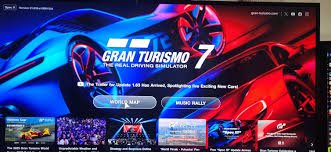
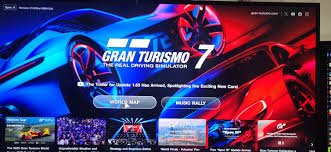
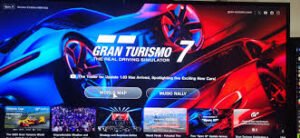
Gran Turismo 7 (2022) refined all previous innovations, blending simulation accuracy with emotional presentation. Ray-traced visuals, 4K resolution, and spatial audio combine to deliver one of the most immersive driving experiences in gaming history.

4. The Cultural Impact of Gran Turismo
Beyond its technical excellence, Gran Turismo has profoundly influenced global car culture. The franchise has introduced millions of players to automotive history, design, and engineering. Real-world manufacturers—such as Nissan, Toyota, and Aston Martin—have collaborated with Polyphony Digital to showcase concept cars and test prototypes within the game.
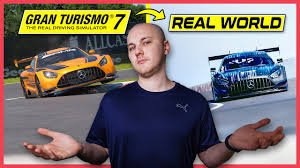
The GT Academy, established in 2008, bridged the gap between virtual and real motorsport by training top Gran Turismo players to become professional racing drivers. Several graduates went on to compete in events such as the 24 Hours of Le Mans, validating the game’s simulation accuracy and its capacity as a training platform.
5. Multiplayer, Esports, and the FIA Partnership
Gran Turismo Sport marked a turning point by redefining the franchise as a competitive online ecosystem. Through partnership with the FIA, players worldwide compete in structured tournaments reflecting real-world motorsport regulations. Driver Rating (DR) and Sportsmanship Rating (SR) systems ensure that fair play and professionalism remain central to competition.
This esports integration elevated Gran Turismo beyond entertainment into a legitimate digital motorsport discipline. Official FIA-certified championships now attract top drivers, brands, and sponsors, bridging the digital-physical divide in unprecedented ways.
6. Sound Design, Aesthetics, and Emotional Resonance
Sound has always played an understated yet critical role in Gran Turismo’s immersive realism. From the mechanical hum of engines to the frictional hiss of tires, each audio element is captured through meticulous field recording. The soundtrack, curated across genres, evokes both adrenaline and nostalgia.
Visually, Gran Turismo represents not only technological prowess but artistic intent. Trackside lighting, natural landscapes, and the reflective textures of bodywork contribute to a distinctly cinematic feel. The game’s focus on automotive photography through Scapes Mode transforms racing into an aesthetic experience—a celebration of beauty in machinery.
7. The Philosophy of Driving: Beyond Competition
Unlike many racing titles that focus solely on winning, Gran Turismo encourages mastery through respect. It teaches rhythm, patience, and awareness. Yamauchi has often described driving as an art form—a symbiosis between human intuition and machine performance.
The franchise embodies this philosophy by rewarding clean laps, precise braking, and consistency over aggression. Every curve and straightaway becomes an exercise in self-control and technical fluency, reflecting the Japanese ethos of craftsmanship and discipline.
8. Legacy and Future Outlook
Today, Gran Turismo stands not only as a game series but as a cultural institution. Its influence extends to automotive design, virtual training, and esports infrastructure. With the growth of virtual reality (VR2 integration in Gran Turismo 7), cloud gaming, and real-time telemetry, the franchise continues to evolve while maintaining its commitment to realism and artistry.
As gaming technology advances, Gran Turismo’s legacy lies not in speed alone but in its dedication to authentic driving expression—a digital testament to the relationship between innovation, discipline, and passion for the automobile.
Conclusion
Gran Turismo remains the benchmark for driving simulation, merging technological excellence with emotional depth. Its continued evolution mirrors the history of modern racing itself—a journey defined by precision, progress, and reverence for the craft of driving. Whether experienced by casual players or professional racers, Gran Turismo endures as both a game and a philosophy: the pure pursuit of perfection on the road.





Post Comment