Tactical Shooters: The Convergence of Realism, Strategy, and Skill
Introduction
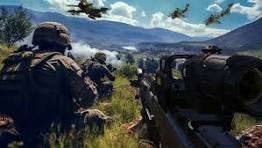
A tactical shooter is a subgenre of shooter games distinguished by its emphasis on realism, strategic planning, team coordination, and methodical gameplay. Unlike traditional run-and-gun shooters that prioritize reflex and speed, tactical shooters simulate the intricacies of real-world combat scenarios. They challenge players to think critically, communicate effectively, and make deliberate decisions under pressure. Over the past three decades, this genre has evolved from military simulation roots into a sophisticated and competitive gaming category that bridges entertainment, training, and strategy.
1. Origins and Historical Evolution
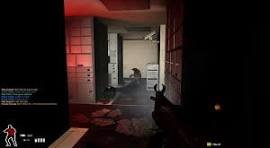
The tactical shooter emerged in the mid-to-late 1990s, during an era when advancements in computer processing and 3D graphics enabled more realistic simulation of environments and physics. Games such as Rainbow Six (1998) and SWAT 3 (1999) pioneered the genre by introducing concepts of squad control, mission planning, and realistic damage modeling. These titles departed from the fast-paced chaos of contemporaries like Doom and Quake, instead rewarding patience, stealth, and precision.
By the early 2000s, Tom Clancy’s Ghost Recon and Operation Flashpoint expanded tactical gameplay into open environments, integrating reconnaissance, ballistics, and command systems. Modern iterations, including ARMA, Rainbow Six Siege, and Valorant, further refined the genre through enhanced AI behavior, destructible environments, and complex team-based dynamics.
2. Core Mechanics and Gameplay Principles
Tactical shooters operate on a foundation of realism and consequence. Common gameplay characteristics include:
- Lethal Combat Dynamics: Players are often incapacitated by one or two well-placed shots, reinforcing cautious movement and positioning.
- Team Coordination: Success depends on communication and role specialization within squads, such as medics, marksmen, or breachers.
- Limited Resources: Ammunition, equipment, and time are restricted, necessitating resource management.
- Environmental Strategy: Players must exploit cover, light, terrain, and sound to maintain tactical advantage.
- Mission Planning: Many titles include pre-mission preparation where players select loadouts, entry points, and strategies before engagement.
3. The Role of Realism and Simulation
Realism is the defining hallmark of the tactical shooter genre. Developers often consult with military advisors and law enforcement experts to ensure authenticity in weapon behavior, communication procedures, and mission design. Ballistics systems simulate bullet drop, wind resistance, and armor penetration, while damage models account for body location and protective gear.
This level of detail transforms gameplay into an immersive exercise in tactical awareness. Players must balance aggression with caution, manage angles of fire, and maintain situational awareness. The genre’s realism has also found utility beyond entertainment; military and police organizations have adopted modified versions of tactical shooters as virtual training tools.
4. Tactical Shooters in Multiplayer and Esports
The evolution of online multiplayer has profoundly shaped tactical shooters. Titles such as Counter-Strike: Global Offensive and Rainbow Six Siege established highly competitive ecosystems with global esports leagues. In these games, teamwork, strategy, and map control dominate over reflexes alone. Each round functions as a high-stakes tactical puzzle, where communication, timing, and anticipation determine victory.
Professional teams employ playbooks resembling real-world tactical doctrine, including strategies for breaching, flanking, and defending objectives. The esports scene has also cultivated a dedicated audience that appreciates the cerebral nature of tactical play, fostering analytical commentary and deep statistical analysis.
5. The Psychology of Tactical Gameplay
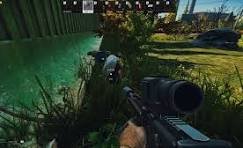
Tactical shooters engage both cognitive and emotional aspects of the player experience. They reward patience, discipline, and situational adaptability. The high tension of one-life or limited-respawn systems produces heightened immersion and psychological realism. Decision-making under uncertainty becomes central, mirroring real-world principles of risk assessment and combat stress.
Moreover, the cooperative structure of most tactical shooters reinforces social cohesion and leadership development. Successful teams often exhibit strong trust, clear communication, and role-based accountability—skills that extend beyond gaming into professional and educational settings.
6. Technological Innovations and Design Trends
Recent advancements have significantly enhanced the tactical shooter experience. High-fidelity physics engines, advanced AI, and real-time destructible environments have increased immersion and unpredictability. Sound design, including directional audio and environmental reverberation, now serves as a critical tactical element.
Artificial intelligence has become particularly significant in single-player and cooperative modes. Enemy AI now demonstrates flanking, suppression fire, and coordinated assaults, while friendly AI can execute complex commands and adapt to player behavior. The integration of virtual reality (VR) and augmented reality (AR) has also begun to redefine the boundaries of tactical realism, offering fully immersive training and gameplay scenarios.
7. Cultural Impact and Critique
Tactical shooters occupy a distinct cultural niche within gaming. They appeal to players seeking authenticity and intellectual engagement rather than instant gratification. Their disciplined pacing and high learning curve cultivate dedicated communities that value mastery and cooperation.
However, the genre has also attracted scrutiny for its militaristic aesthetics and the potential glamorization of violence. Developers have responded by emphasizing realism over sensationalism, framing tactical shooters as simulations of procedure and coordination rather than glorified combat spectacles.
8. The Future of Tactical Shooters
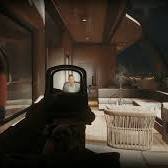
The future of the tactical shooter lies at the intersection of realism, accessibility, and innovation. Emerging technologies—such as AI-driven adaptive difficulty, real-time data analytics, and cloud-based multiplayer architecture—are likely to enhance realism while maintaining competitive integrity. Developers are also exploring hybrid designs that blend tactical depth with accessibility, broadening the genre’s appeal without diluting its strategic identity.
Furthermore, narrative integration and procedural generation may enable dynamic mission design, ensuring that no two tactical scenarios play identically. As virtual training, simulation, and entertainment continue to converge, tactical shooters are poised to remain both a cultural and technological benchmark for interactive realism.
Conclusion
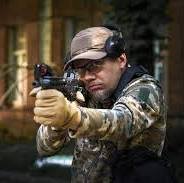
Tactical shooters represent a sophisticated synthesis of precision, intelligence, and teamwork. They challenge conventional definitions of shooter gameplay by privileging thought over reflex, discipline over chaos, and cooperation over individualism. Whether serving as entertainment, competitive sport, or professional simulation, tactical shooters exemplify the enduring human fascination with strategy, coordination, and mastery under pressure. In an industry often dominated by spectacle, they stand as a testament to the power of realism and restraint.





Post Comment